117
PROP SHAFT, DRIVE SHAFTS AND DIFFERENTIAL
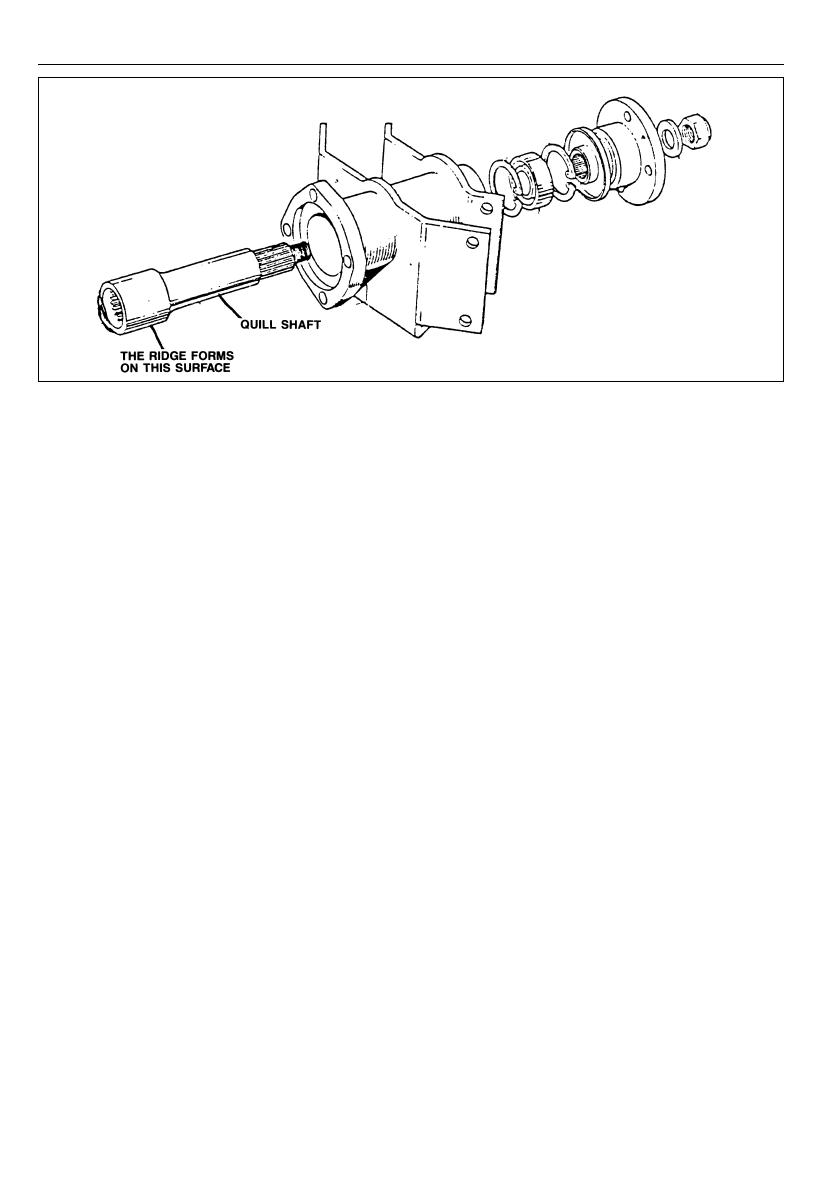
Figure 2.
shaft. When a new seal is fitted it does not match this
A leather oil seal fitted to a car which is not driven for
ridge and allows a slight leakage of oil (Figure 2).
some years is likely to dry out and shrink, so that next
A solution is to take the quill shaft to an engineer who
time the car is driven a severe oil leak is caused. If you
can remove the ridge and thus hopefully ensure an
decide to renew the seal, make sure you soak it well
oil tight seal. There is obviously a limit to how many
in diff oil for 24 hours before fitment, to allow the
times this can be done as a little metal will be
leather to expand onto the shaft.
removed on each occasion.
Another very important point to note is that if the
However a further option exists. When replacing the oil
breather should become blocked, oil will pour out of
seal the workshop manual instructs you to drive the
the front seal, so do check this is clear and also
new seal fully home into the seating on the
that the diff has not been overfilled before tackling
differential casing. It is possible though to get some
replacement of the oil seal. The breather consists
adjustment within the seating when fitting the oil
of a hole with a split pin loosely fitted inside it.
seal. The aim is to fit the seal in such a position that
The head of the split pin should be jiggled to ensure
the lip rides on a different part of the quill shaft to the
it is clear, and can be found on the offside top face
previous oil seal avoiding the ridge. While this is a bit
of the diff rear casing.
more Heath Robinson than the first method it can
Issue 140 (April 1992), page 24
still be successful and has the benefit of distributing
any slight wear along the surface of the quill shaft.
Differential Oil. A member of the Technical
Issue 127 (February 1991), pages 21,22
Panel gave this advice:
WHEN REFILLING or topping up diffs, make very sure
Oil Leaks from the Differential. A Technical
that the EP90 or 80/90 oil used is to GL4
Panel member replied to a question about
specification. Do not use GL5 as it has been found
leakage from the front oil seal:
that the additives in it attack the copper thrust
THE OIL SEAL LEAKAGE you mention is very
washers behind the planet wheels. This applies to all
common, in fact almost universal on the Stag. It is a
Stag/Herald/ Spitfire/TR and 2000 models.
little-known fact that oil seals are engineered so that
Issue 204 (February 1998), page 30
they pass a very small quantity of oil so as not to burn
David Everett (10952) commented:
the sealing surface and thus eliminate the sealing
IN A RECENT EDITION of the Club magazine we were
qualities. As a general practice, when assembling any
advised not to use GL5 gear oil because the additives
oil seal, always smear it liberally with oil or grease.
corroded some parts of the differential.
This particular seal is made of leather, yes leather! I am
EP oils may use two kinds of sulphur active and non-
told this is because it will happily run well out of
active. All the major companies stopped using active
alignment whereas the modern Neoprene seals are
sulphur at least 10-15 years ago and all the additives
precision components. Just to put it all in
now used are safe. However, as the axle oil is not
perspective, leather oil seals were used on cart and
changed on Stags, some cars will have old oil in them
carriage wheels!
and any very old stock of oil used for topping up may
Only you will know whether the leak you are
be suspect. When replacing or topping up with oil,
experiencing is just the slight misting designed into
GL5 gives maximum protection.
the seal to keep it wet, or if it is truly excessive such
I hope this makes the situation clearer.
that regular level checking cannot keep it supplied
Issue 209 (July 1998), page 53
with oil. A drip or two a day can soon empty the diff.